




EBI Deciphers: The Secrets of Macarons
The macaron, a technical pastry
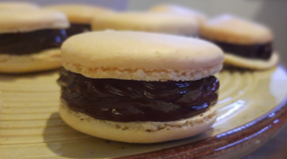
Figure 1: Macarons, appetizing and demanding
The macaron is a French pastry made of two light shells of almond flour, sugar, and egg whites, filled with cream or ganache. Descended from almond biscuits introduced to France during the Renaissance, likely from Italy, it has evolved over the centuries. In the 19th century, the filled “Parisian” version emerged, distinct from the traditional Nancy macaron, which is simple and unfilled. Having become emblematic of French pastry, it is now available in a wide variety of flavors and colors.
The macaron is often presented as one of the most demanding pastries, its success relying on precise physicochemical mechanisms that science helps to illuminate. Chemistry and biochemistry provide concrete answers to three key stages in creating smooth, even, and well-developed shells: the aging of the egg whites, the macaronage process, and the crusting, each influencing the final structure and texture.
Fresh or aged egg whites: a question of protein
In pastry making, it is frequently recommended to use “aged” egg whites, that is, egg whites separated from the yolks one to two days prior and taken out of the refrigerator several hours before use. But why does this practice improve the final result?
Aged egg whites whip up more quickly and form a firmer, denser foam than egg whites that have just been separated from the yolks before use. This difference is explained by several biochemical phenomena. Egg white, composed mainly of water (approximately 90%) and proteins, primarily ovalbumin, undergoes slight water evaporation at rest, which promotes the partial denaturation of proteins, that is, the unfolding of their three-dimensional structure.
During aeration (the process of incorporating air into a mixture by stirring to create a foam), these denatured proteins adsorb more readily at the air-water interface, stabilizing the incorporated air bubbles. This results in a foam composed of smaller, more homogeneous bubbles, which provides greater stability and a structure suitable for forming macaron shells.
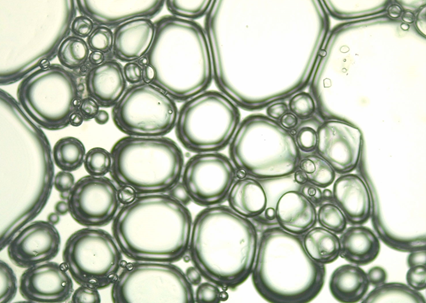
Figure 2: Egg white whipped into stiff peaks seen under a microscope
Macaronage: a balance between air and density
The macaronage process is often dreaded, as it directly determines the final texture of the macaron shells. It involves gently folding the meringue with the almond flour and icing sugar mixture to obtain a smooth and homogeneous batter. But beware, poorly executed macaronage will guarantee failure!
From a scientific perspective, macaronage involves controlling the amount of air in the batter to achieve the correct density (the amount of matter contained in a given volume). The optimal batter consistency is reached when a “ribbon-like” texture is observed.
A batter that is insufficiently mixed, and therefore too thin, retains too many air bubbles. During baking, these bubbles expand unevenly, resulting in irregular and cracked shells. Conversely, a batter that is overmixed, and therefore too thick, will be too runny and will produce flat, crisp shells.
Ideally, a properly macaron-made batter eliminates excess air while retaining enough structure to form smooth, slightly domed shells after baking.
Crusting: controlling water evaporation
After poaching, the shells are left to rest for an hour. A thin crust forms on the surface: the dough dehydrates slightly and becomes dry to the touch.
This superficial dehydration plays a fundamental role during baking. When the shells are placed in the oven, the water contained in the dough evaporates rapidly. In the case of uncrusted shells, the steam escapes diffusely, causing bubbles to form and uneven baking.
Conversely, when the shells are crusted, the hardened surface acts as a barrier. Steam can only escape through the base of the shell, causing the batter to rise vertically. This phenomenon leads to the formation of the “foot,” the visual signature of a successful macaron. Crusting is therefore a way to direct steam and control the shell’s deformation during baking.
Get cooking!
Chrystel Neff – Chemistry Professor and Head of Pedagogical Development