



Bio-industries, far more than biotechnology
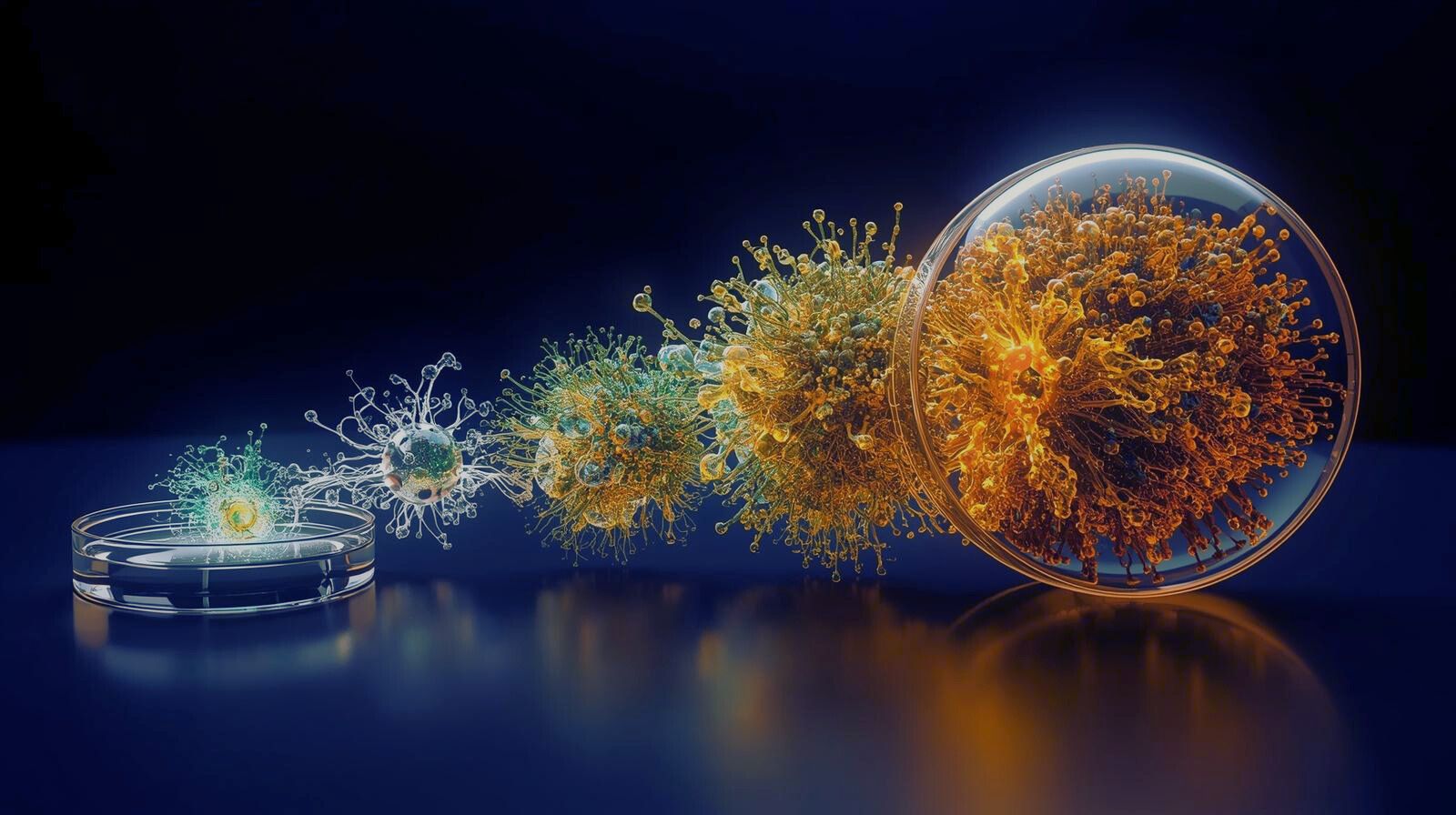
Biotechnology lays the groundwork, but the bio-industries go much further. They don’t just apply science; they transform it into concrete, useful solutions that can be scaled up. This is where innovation becomes impact, where an idea moves beyond the prototype stage to become a reliable, sustainable, and accessible product.
In short, bio-industries extend, amplify, and secure the full potential of biotechnology. They serve as the essential bridge between discovery… and reality.
A winning combination: biotech companies and bio-industries
Biotechnology invents, tests, and explores.
Biotechnology is the playground where it all begins: it’s where we devise new solutions, conduct experiments, and push the boundaries of life to meet the major challenges of tomorrow. It’s where innovations, proofs of concept, and groundbreaking discoveries are born.
Bio-industries process, produce, and distribute.
The bio-industries, for their part, are taking the lead. They turn these advances into reliable, optimized, and sustainable processes. They produce on a large scale, ensure quality, secure the supply chain, and support market launch. In short: they bring ideas to life.
One without the other? It doesn’t work.
To make a real impact, we need this combination of scientific agility and industrial strength. Together, biotech companies and the biotech industry form a complete value chain, capable of turning a laboratory idea into a tangible, high-performance product that is accessible to everyone. This is a true, game-changing collaboration—from concept to application, from prototype to production.
Innovation + Industrialization
the duo behind the products of the future
The future of bio-based products, healthcare, the food industry, and the environment hinges on a simple balance:
Without biotechnology, there is no innovation.
Without bio-industries, there is no impact.
The two are working together to:
- develop healthier ingredients, bio-based materials, biofuels, and innovative therapies
- reduce the carbon footprint of production
- speed up the time it takes for innovations to reach the market
- secure local and sustainable supply chains
It is this combination that truly makes it possible to change the scale of life.
The sectors where this duo is making a huge difference
- Food industry: innovative cultures + plants capable of operating 24/7
- Health & Bioprocesses: Complex Biomolecules + Controlled and Regulated Production
- Bio-based materials: discovering new polymers + cost-effective industrialization
- Environnement & bioénergie : innovations microbiennes + mise en œuvre sur sites industriels
Biotech companies: where innovation begins
Biotechnology is the realm of discovery.
It is here that novel molecules, optimized microorganisms, and revolutionary processes are developed.
It lays the groundwork:
• scientific discovery
• proof of concept
• optimization under controlled conditions
• small-scale prototypes
• exploratory R&D
In short: biotech companies are paving the way.
Bio-industries: Where Innovation Becomes Reality
An innovation is only valuable if it can be produced, distributed, and adopted.
This is precisely the role of the bio-industries.
They step in when it is necessary to:
• increase volumes
• stabilize production
• adapt processes to industrial constraints
• ensure quality, safety, and regulatory compliance
• control costs
• automate, monitor, and secure facilities
They are the link that transforms a biotech discovery into a solution for society.

When I first joined EBI, I thought biology and biotechnology were at the heart of the business. Then I discovered the bio-industries… and I realized that innovation is only valuable if it can be produced, controlled, and deployed. Today, that’s what drives me: seeing how an idea from the lab can become a real, useful, and available product. It’s this bridge between science and industry that inspires me to push further every day.