






EBI Deciphers: Oily Hair
Oily hair: understand it to take better action!
Having hair that gets greasy quickly is a very common phenomenon, often considered a simple aesthetic problem, but which actually reflects an imbalance of the scalp.
To understand this mechanism, it’s essential to look at the role of sebum and the scalp ecosystem. Sebum is a substance naturally produced by the sebaceous glands to protect the skin and hair. The scalp also harbors a microbiota, that is, a collection of microorganisms (bacteria, yeasts, etc.) naturally present on its surface. When everything is balanced, sebum, pH, and the microbiota work together to maintain a healthy scalp.
An imbalance in this ecosystem can cause oily hair, but also dandruff, itching, and redness. Several factors can be responsible, such as stress, pollution, hormonal changes (especially during adolescence), or the use of overly harsh products.
Why do some people, especially teenagers, have hair that gets greasy very quickly? What are the underlying mechanisms and how can we adopt the right daily habits?
In this new article, EBI deciphers the causes of oily hair and offers simple and suitable solutions to help restore a balanced scalp, through gentle hygiene and good habits.
Why does hair become oily?
Hair is naturally protected by a thin layer of sebum, an oil produced by tiny glands called sebaceous glands, located at the base of each hair. This sebum is essential: it nourishes, protects, and gives shine to the hair. But when it is produced in excess, the roots become oily and sticky, and the hair looks dirty even if it has just been washed.
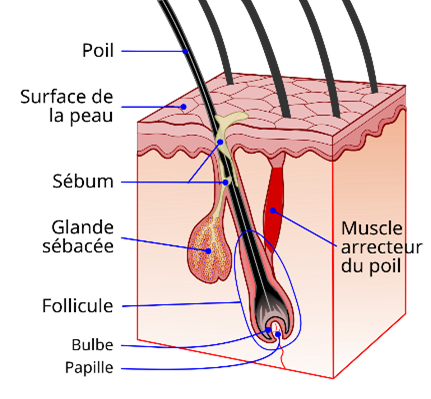
Figure 1: Diagram of a scalp section
This overproduction of sebum is often linked to several factors. Hormonal fluctuations, particularly during adolescence, can stimulate the activity of the sebaceous glands. Stress can also play a role, as it disrupts the scalp’s natural balance. Furthermore, washing your hair too frequently can worsen the situation: by constantly removing sebum, the scalp reacts by producing even more!
Finally, some hair products can also disrupt the scalp’s balance. Overly aggressive formulas, often rich in harsh detergent surfactants (like strong sulfates), not only remove excess sebum but also the skin’s natural protective lipids. Deprived of this barrier, the scalp reacts by producing even more sebum to defend itself, creating a vicious cycle: the more you wash, the faster it becomes oily again.
Conversely, overly nourishing treatments or those loaded with silicones and oils can weigh down the roots, giving the impression of greasy hair the day after washing. The challenge, therefore, lies in finding a balance between effective cleansing and respecting the natural hydrolipidic film.
Sensory evaluation, a key area of expertise for EBI, offers a structured method for characterizing perceptions related to oily hair, based on the analysis of visual shine, touch, and sensations of freshness, lightness, and comfort after washing. This approach allows for a better understanding of the real impact of products and everyday routines, establishing a link between the biological mechanisms of hair and the sensory perceptions experienced by consumers.
The right steps to regulate oily hair
The first step to achieving healthy hair is to space out your shampoos. When hair is washed daily, the scalp tends to react by producing more sebum. This excessive washing stimulates the sebaceous glands, thus perpetuating the oily appearance. Conversely, by gradually spacing out washes, for example, by switching to every other day, the scalp slowly regains its natural balance and better regulates its sebum production.
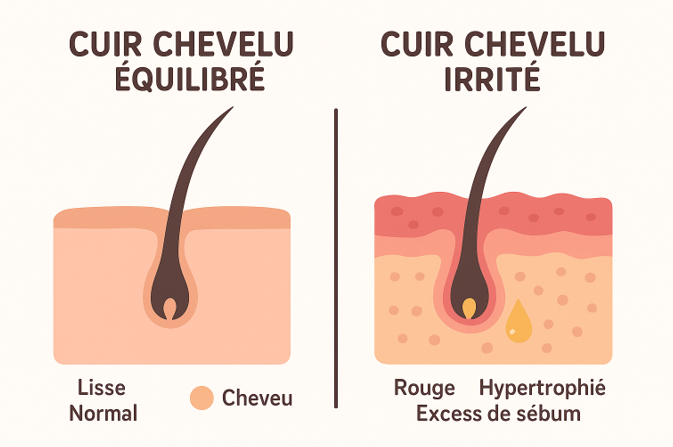
Figure 2: Diagram comparing a healthy scalp and an irritated scalp (AI-generated image)
Choosing the right shampoo plays a crucial role in regulating sebum production. Formulas specifically designed for oily or oily hair effectively cleanse without irritating the scalp. Products containing mint, green tea, or clay extracts help purify the hair while preserving its natural balance.
During washing, a gentle massage with your fingertips promotes microcirculation and supports scalp health. Conversely, overly vigorous movements or scratching can excessively stimulate the sebaceous glands.
To extend the time between washes, dry shampoo is an interesting alternative. Available as a spray or powder, it contains absorbent agents such as starch, talc, or clay. These particles trap sebum at the roots, instantly restoring volume and freshness to the hair. Its occasional use, ideally limited to twice a week, helps preserve the scalp’s ability to breathe while prolonging the feeling of cleanliness.
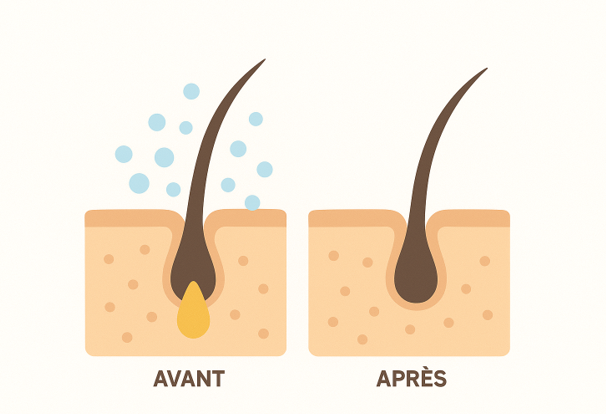
Figure 3: Diagram of dry shampoo particles absorbing sebum from the roots (AI-generated image)
Small mistakes to avoid
Certain everyday habits can, without us even realizing it, contribute to excess sebum. Water that is too hot stimulates the sebaceous glands and promotes premature oiliness, while lukewarm or slightly cool water better preserves the scalp’s balance. Conditioner should ideally be applied to the lengths and ends to avoid weighing down the roots. Brushing too frequently, or with a dirty brush, distributes sebum throughout the hair. Finally, constantly wearing hats or caps prevents the scalp from breathing and accentuates the feeling of oily hair.
In conclusion, understanding how your scalp works is the first step towards lasting balance. Gradually spacing out washes, using gentle and suitable formulas, and occasionally incorporating natural treatments or dry shampoos can regulate sebum production without damaging the hair fiber. Oily hair is not inevitable: with measured steps and a little time, hair can regain lightness, shine, and vitality.
References
- Yu, H., Li, J., Wang, Y., Zhang, T., Mehmood, T., & Habimana, O. (2025). Dysbiosis and genomic plasticity in the oily scalp microbiome: a multi-omics analysis of dandruff pathogenesis. Frontiers in Microbiology, 16. DOI : 10.3389/fmicb.2025.1595030
- Leite, M. G. A., et al. (2020). Correlations between sebaceous glands activity and porphyrins in the oily skin and hair and immediate effects of dermocosmetic formulations. Journal of Cosmetic Dermatology.
- Mosca, S., & al. (2025). The Sebaceous Gland: A Key Player in the Balance of Skin Homeostasis. Cells, 14(10), 747. DOI : 10.3390/cells1410747
- Wiley, H., & al. (2018). Sensitive scalp is associated with excessive sebum and abnormal barrier function. Journal of Cosmetic Dermatology, 17(6), 1128-1134. DOI : 10.1111/jocd.12736
- Smith, K. R., & al. (2008). Thematic review series: Skin Lipids. Sebaceous gland lipids. Journal of Lipid Research, 49(1), 1-2. DOI : 10.1194/jlr.R800015-JLR200